今日头条
20家“链长”带动1755家“链员”做大做强_我的网站

A |
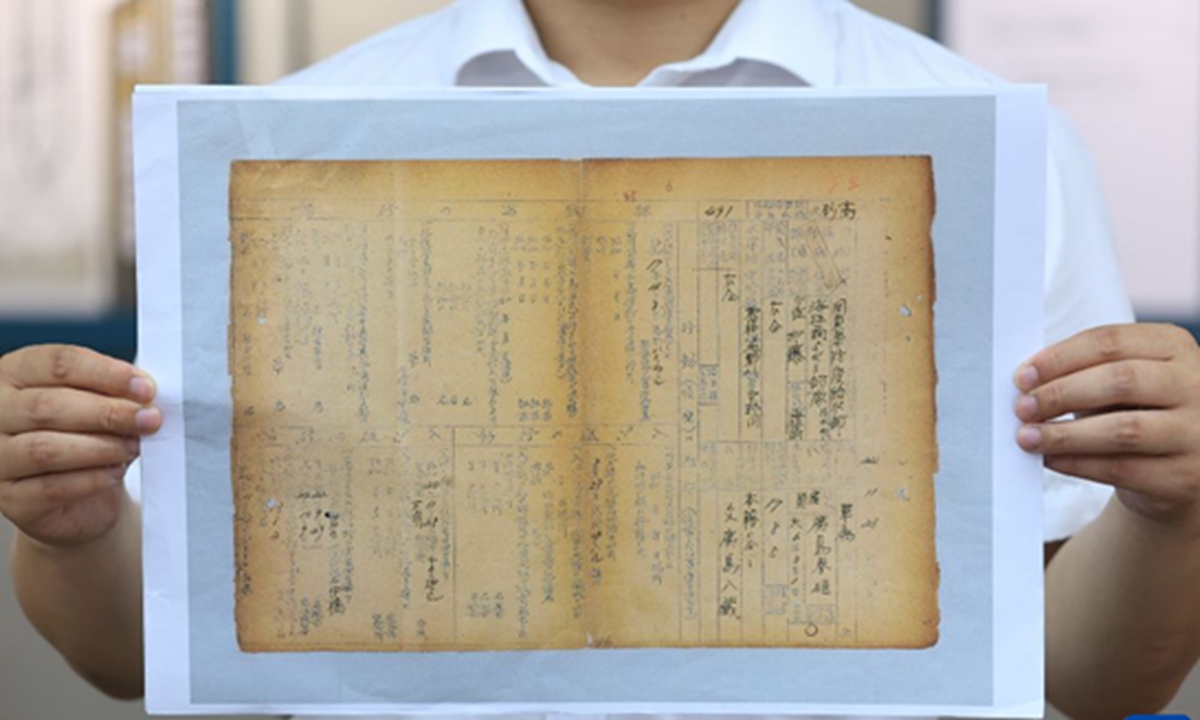
Newly released wartime records from the Hailar branch of Japan's notorious Unit 731. Photo: Xinhua
Newly released wartime records from the Hailar branch of Japan's notorious Unit 731 reveal how the Japanese military disguised biological warfare personnel as conventional infantry troops to conceal secret operations, including human experimentation.
The Exhibition Hall of Evidences of Crime Committed by Unit 731 of the Japanese Imperial Army released on Wednesday a 185-page archive of "personal background declaration" from the Hailar branch of Unit 731, also known as "Manchuria Unit 543". The documents show that the Japanese military concealed its biological warfare operations under the guise of conventional infantry units and shed new light on the Soviet Union's continued efforts after World War II to investigate and prosecute Japanese biological warfare crimes.
Unit 731 was a top-secret biological and chemical warfare research base established as the nerve center for Japanese biological warfare in China and Southeast Asia during WWII. At least 3,000 people were used in human experiments conducted by Unit 731, and more than 300,000 people in China were killed by Japan's biological weapons, according to the Xinhua News Agency.
The Japanese Kwantung Army established five branches of Unit 731 in Northeast China - in Hailar, Sunwu, Mudanjiang, Linkou and Dalian. Located in the northeastern part of the Inner Mongolia Autonomous Region, near China's borders with Mongolia and the Soviet Union, the Hailar branch served as a frontline base of the Japanese imperialist army for potential biological warfare operations against the Soviet Union.
The newly released 185-page archive contains key information on 156 members of the Hailar branch of Unit 731, including their names, military ranks, dates of enlistment, duties, transfers and postwar whereabouts. Researchers said the documents constitute first-hand official records for studying the branch's personnel structure and operations.
Jin Shicheng, a researcher at the Exhibition Hall, said the study produced two major findings. First, the documents reveal that the Japanese military recruited personnel under the cover of ordinary infantry units to conceal biological warfare activities. Some personnel, for example, were recruited under the names of conventional units such as Manchuria Unit 97, Unit 177 and Unit 201. They were then sent to Unit 731 headquarters for three months of training before being assigned to the Hailar branch. The deceptive recruitment system was intended to conceal the crimes committed by Unit 731, including human experimentation.
Moreover, the archive provides evidence of continued postwar investigations into Japanese biological warfare crimes. Of the 156 personnel listed in the documents, 145 were captured by Soviet forces after the war and detained in the Soviet Union. Four were tried in Khabarovsk between April and September 1950. The researcher said the records show that Soviet investigations and judicial efforts concerning Japanese biological warfare crimes continued after the trial held in 1949.
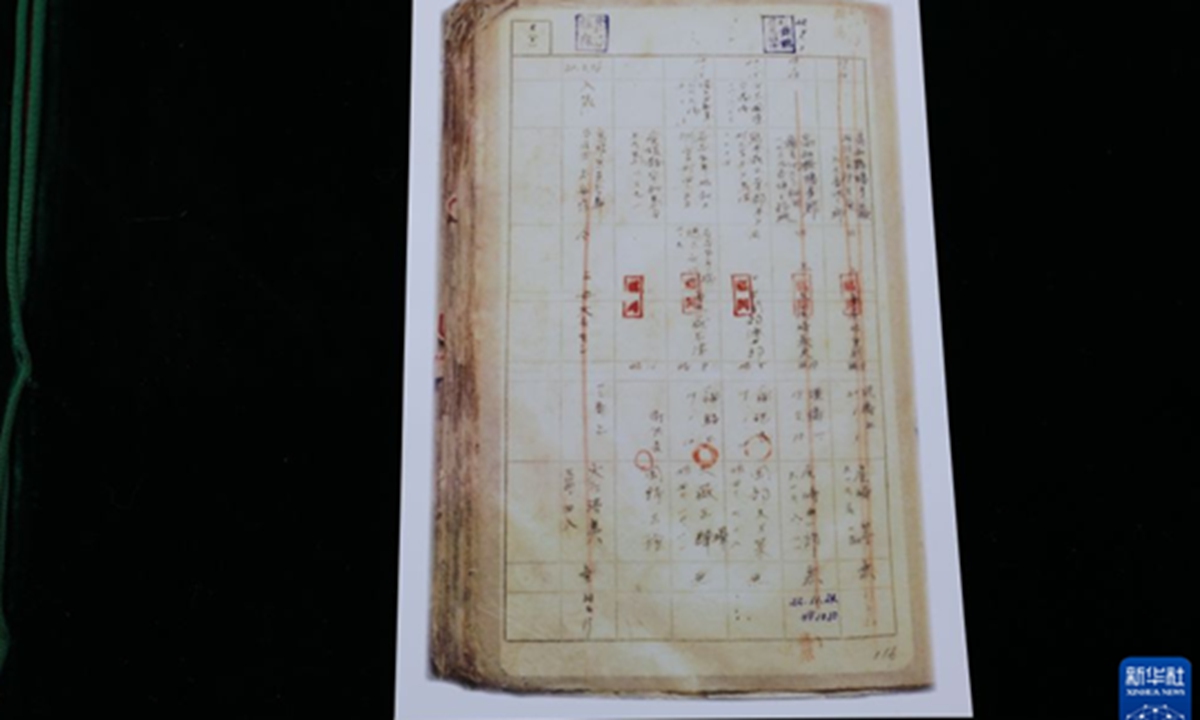
A photo published by Xinhua showed a record on medic Tanizaki Hitoshi in the "personal background declaration" records of Unit 731's Hailar branch. Photo: Xinhua
A photo published by Xinhua showed a record on medic Tanizaki Hitoshi in the "personal background declaration" records of Unit 731's Hailar branch. Tanizaki, originally named Ozaki Hitoshi, is documented in historical records that, together with his oral testimony, form a chain of evidence further substantiating the crimes committed by Unit 731.
Experts said the new revelation of the Hailar branch deepens research into Unit 731 and, together with previously obtained oral testimony from former members, form a broader chain of evidence. The official records exposed the efforts by the Japanese military to disguise their crimes against humanity and provided further evidence of the state-organized system behind Japan's biological warfare program, while adding important material to research on Unit 731 and postwar prosecutions.
Global Times
。 沈鼓集团是我省压缩机产业链链主企业,在质量强链工作推动下,多家产业链上企业共同推行“I-PDMS”质量管理模式,解决了产品全生命周期的质量控制和管理问题,使产品和服务质量指标稳中有升。

B |
“质量是企业的生命,提升产品质量,不能仅仅依靠企业‘单打独斗’,我们必须联合全链条各方力量,协同攻关。”近日,沈鼓集团战略投资部负责人孔祥卓在接受记者采访时说。
今年以来,我省市场监管部门深入实施质量强链,助力产业链供应链高质量发展,围绕4个万亿级产业基地和22个重点产业集群,遴选工业机器人、压缩机、石化、氢能等16个重点产业链,编制了16项重点产业提升方案。
省市场监管局组织20家链长单位、24家链主企业、95家技术机构、1755家链上企业,建立质量强链方阵,联络科研院所72家,强化计量、标准、检验检测、认证认可等质量要素协同,组建质量基础设施创新联合体5个,打造“链长组织、链主引领、链员协同、基础支撑、技术赋能”的质量提升新模式。
开展质量技术帮扶,攻坚质量难题是增强产业链质量竞争优势的关键。

C | 我省质量强链工作依托链主企业、技术机构、高校、科研机构等,成立专家指导组,深入各重点产业链供应链开展质量技术帮扶指导,开展质量强链工作专项培训,指导企业编制质量提升方案,绘制质量图谱。坚持因链施策、一链一策,聚焦产业链堵点、难点、痛点问题,绘制质量图谱28张,梳理质量问题301条,确定重点攻关项目118个,撬动企业投入经费近8.7亿元。

D | 累计建设质量基础设施“一站式”服务站点127个。

E |
目前,我省质量强链工作已经取得阶段性成效。全省累计参与制修订相关国家标准147项、计量标准规范79项,开展质量技术攻关583项,解决质量技术问题788项,新增认证获证组织362家。工业机器人产业入围全国质量强链十大标志性项目,争取国家一期项目资金188万元。工业机器人、菱镁、石化等7个产业链成功入围全国质量强链百大重点项目,数量居全国第二位。
责任编辑:李丹。
Current article:http://yfkxmxp.cuancuguanzhongnieqinyazhun.cyou/list_19yd/z7w.html
Published on:17:21:22